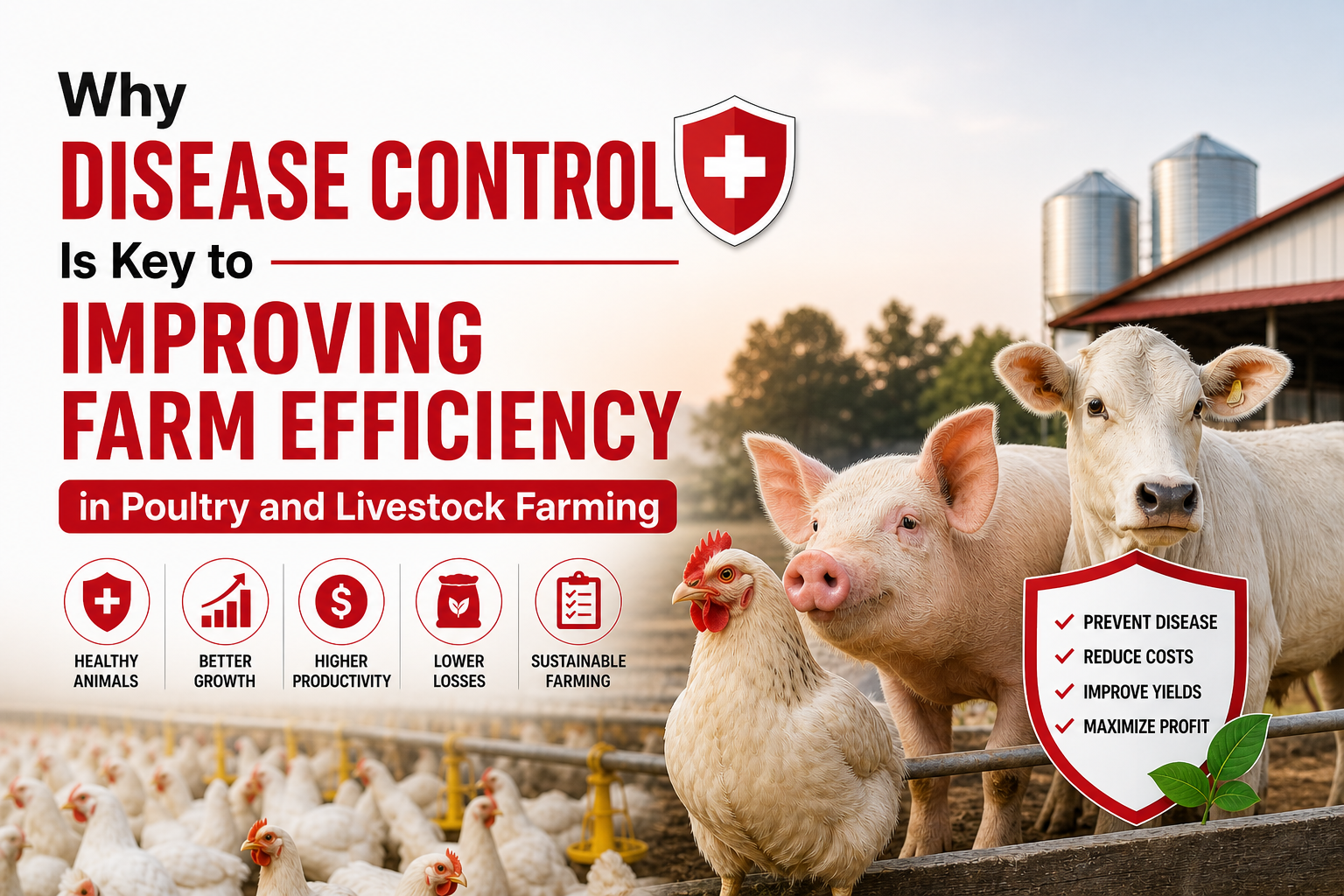
In poultry and livestock farming, disease control is one of the most critical factors influencing farm efficiency and profitability.
While feed quality, housing, and breed selection are important, disease outbreaks can quickly undermine all other efforts, leading to high mortality, poor growth performance, and significant financial losses.
This makes livestock disease prevention and effective animal health management essential for every farmer aiming for sustainable productivity.
What Is Farm Efficiency in Poultry and Livestock Farming?
Farm efficiency refers to how effectively a farm converts inputs such as feed, water, labor, and time into productive outputs like meat, eggs, or weight gain.
Poor disease control reduces efficiency by:
- Increasing mortality rates
- Reducing feed conversion efficiency
- Slowing down growth performance
- Increasing veterinary and treatment costs
- Disrupting production cycles
This is why disease control in poultry farming is directly linked to profitability.
How Disease Reduces Farm Productivity
Disease outbreaks affect farms in several important ways:
- Reduced Growth Performance
Infected animals divert energy from growth to survival, leading to poor weight gain and delayed maturity. - Increased Mortality Rates
Severe infections can wipe out entire flocks or herds if not controlled early. - Higher Production Costs
Farmers spend more on medications, treatments, and veterinary services when disease is present. - Poor Feed Conversion Ratio (FCR)
Sick animals consume feed inefficiently, increasing cost per unit of production. - Disrupted Production Cycles
Disease outbreaks delay sales, restocking, and overall farm planning, affecting continuity and profitability.
Importance of Disease Control in Poultry and Livestock Farming
Effective livestock disease prevention ensures:
- Higher survival rates
- Better growth performance
- Improved feed efficiency
- Reduced veterinary costs
- Stable and predictable production
Healthy animals consistently outperform sick ones in both productivity and profitability.
Veterinary Support in Disease Control Systems
Effective disease control requires more than farm-level management. It depends on structured veterinary support systems, accurate diagnosis, and reliable treatment solutions.
supports farmers through animal health advisory services, disease awareness programs, and early detection systems that strengthen preventive livestock health management. This helps farmers reduce disease risks before outbreaks occur.
When treatment is required, provides veterinary pharmaceutical solutions that support effective disease management, recovery, and control of infections in livestock and poultry systems.
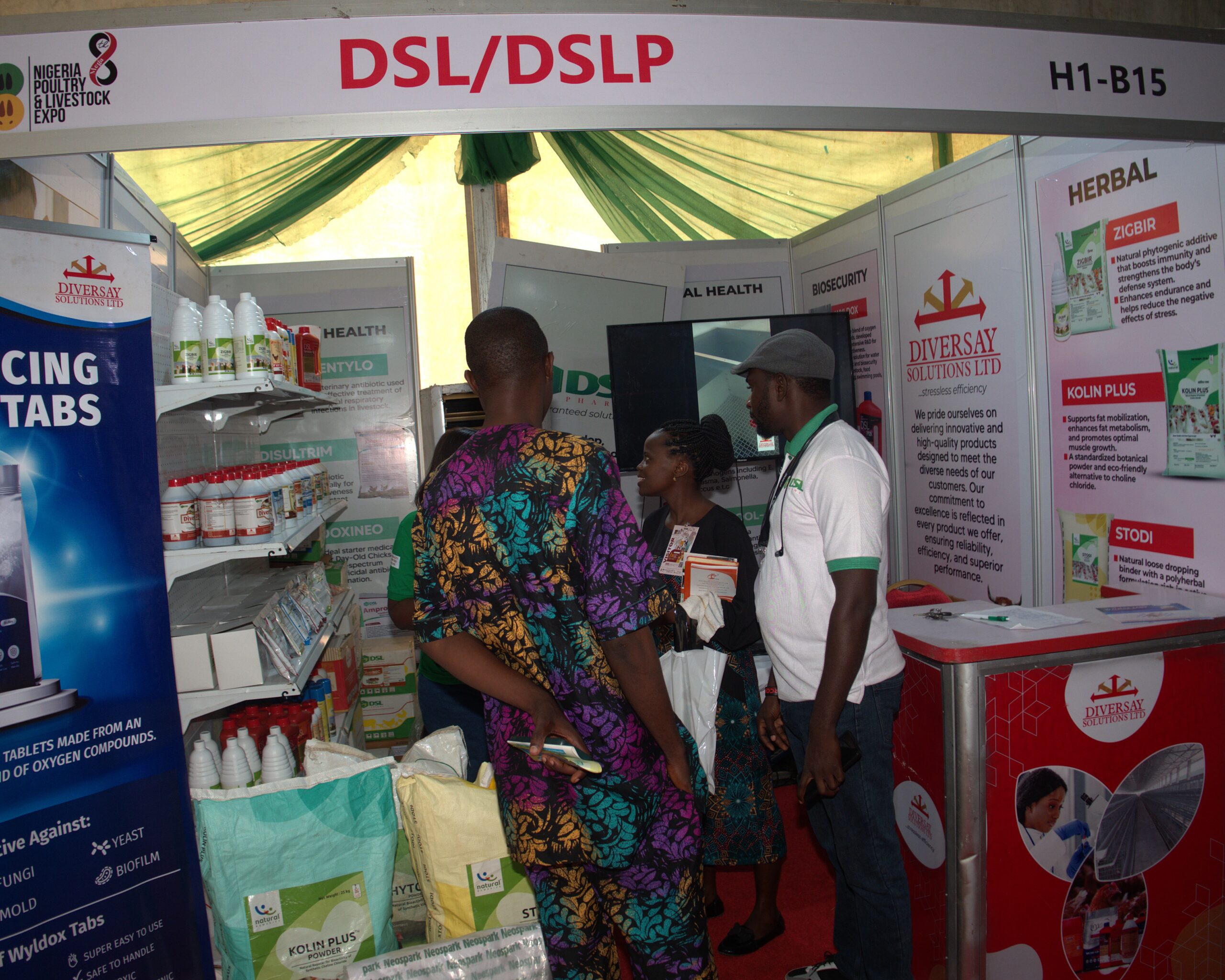
Together, Diversay Solutions and DSL Pharma form a connected animal health ecosystem that improves response time, reduces losses, and strengthens overall farm efficiency.
Key Disease Control Strategies for Farmers
To improve poultry farm efficiency, farmers must adopt structured disease prevention systems:
1. Biosecurity Practices
- Controlled farm access
- Footbaths and sanitation stations
- Equipment disinfection
- Visitor restrictions
2. Vaccination Programs
Proper vaccination schedules help prevent common poultry and livestock diseases.
3. Early Disease Detection
Regular monitoring helps identify symptoms early before outbreaks spread.
4. Hygiene and Sanitation
Clean housing and water systems reduce pathogen exposure.
5. Prompt Treatment and Isolation
Sick animals must be isolated and treated quickly to prevent herd or flock infection.
Link Between Animal Health and Farm Efficiency
Strong animal health systems directly improve:
- Feed conversion efficiency
- Growth rate consistency
- Egg and meat production output
- Farm profitability
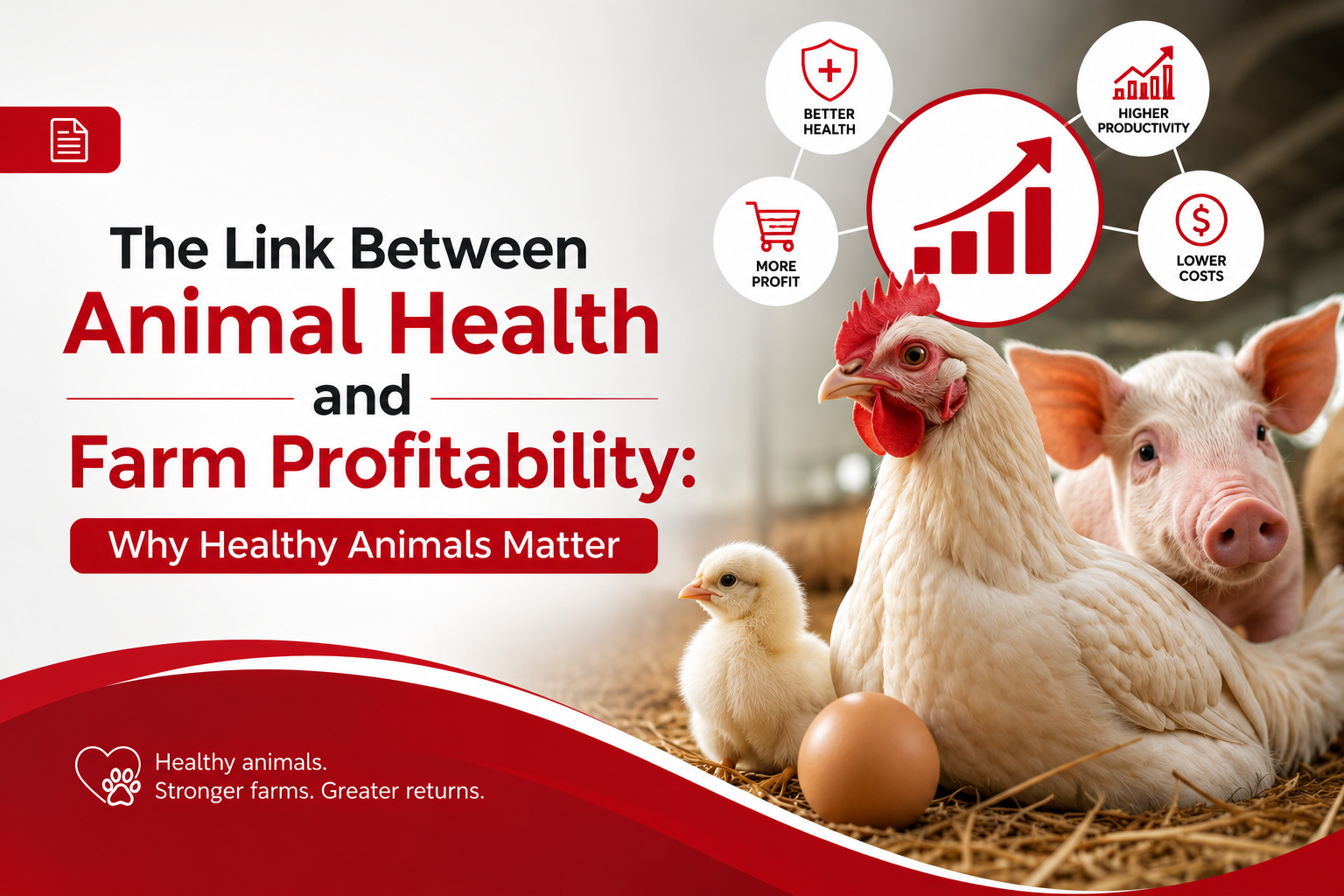
This shows that disease control is not only a health requirement but also a productivity strategy.
Conclusion
Disease control is a core driver of farm efficiency in poultry and livestock production. Without strong animal health management, even the best feed, genetics, and housing systems cannot deliver optimal results.
Farmers who invest in biosecurity, vaccination, early detection, and veterinary support systems are better positioned to achieve consistent productivity and profitability.
Through integrated support from and , farmers gain access to both preventive and treatment-based animal health solutions that strengthen farm efficiency and reduce production losses.